Are you struggling to find the perfect tool to manage your tasks and boost your productivity? Choosing between ClickUp and Taskroup can feel overwhelming, especially when you want a system that truly fits your workflow.
You need a solution that simplifies your day, keeps everything organized, and helps you get more done without the hassle of juggling multiple apps. That’s exactly why we’re diving deep into ClickUp Vs Taskroup — to help you discover which platform can transform how you work. ClickUp is known for replacing every app, AI agent, and human collaboration in one place, designed to maximize your productivity like never before. Wondering if it’s the right fit for you? Check out ClickUp here and see how it can change your work life: Explore ClickUp Now. Keep reading to uncover the key differences, features, and benefits of both ClickUp and Taskroup — so you can make a confident choice that suits your unique needs. Your productivity breakthrough starts here!
Introduction To Clickup And Taskroup
Choosing the right productivity tool shapes how teams work every day. ClickUp and Taskroup serve many users but with different approaches. Both aim to boost efficiency and organize tasks clearly. Understanding their core features helps pick the best fit for your needs.
Overview Of Clickup: Purpose And User Base
ClickUp is a versatile platform designed to replace multiple apps. It gathers tasks, documents, chats, and AI agents in one place. The goal: maximize human productivity.
Its users include:
- Remote teams needing clear task tracking
- Freelancers managing varied projects
- Businesses seeking to reduce software clutter
ClickUp offers:
- Customizable task types and views
- Automation to save time
- Integration with many apps
Introduction To Taskroup: What It Offers
Taskroup focuses on simple, straightforward task and project management. It suits users who want less complexity and easy collaboration.
Key features include:
- Intuitive task lists and boards
- Real-time updates for team communication
- Basic time tracking and reminders
Its user base tends to be:
- Small teams
- Startups
- Individuals seeking fast setup and use
Why Compare Clickup And Taskroup In 2026?
Both tools evolve with new features each year. In 2026, productivity demands grow stronger. Teams want tools that adapt and scale easily.
Comparing these platforms helps:
- Identify the tool matching your workflow style
- Understand strengths and limits of each
- Choose software that fits budget and team size
The choice affects daily work speed, team clarity, and project success. Clear insights into ClickUp and Taskroup guide better decisions.
Key Features That Set Clickup Apart
ClickUp offers a rich set of features designed to maximize productivity by uniting multiple tools in one platform. Its design supports varied work styles and team sizes, making it a versatile choice for managing tasks, documents, and communication efficiently. These key features highlight why ClickUp stands out from competitors like Taskroup.
All-in-one Workspace: Combining Project Management, Docs, And Automation
ClickUp integrates project management, document creation, and automation into a single workspace. This consolidation reduces the need to switch between apps, saving time and effort.
- Tasks and projects managed with flexible views like list, board, and calendar
- Docs and wikis created, edited, and shared directly within the platform
- Automation rules to streamline repetitive work, such as status updates and notifications
This unified setup helps teams stay organized and focused without juggling multiple tools.
Customizable Workflows: Tailoring Productivity To Your Needs
ClickUp allows users to design workflows that fit their unique needs. Each project or team can customize task statuses, priorities, and layouts.
- Create custom task statuses to match your process stages
- Set priorities and tags for better task organization
- Use custom fields to track specific data relevant to your work
- Switch between different views like Gantt charts, mind maps, or tables
This flexibility supports diverse teams and complex projects without compromise.
Advanced Collaboration Tools: Enhancing Team Communication
Effective communication is key in any project. ClickUp provides several built-in tools to keep teams connected and informed.
- Comments and mentions on tasks for clear, contextual discussions
- Real-time chat and collaborative editing in Docs
- Notifications tailored to user preferences to avoid overload
- Assign comments as tasks to ensure follow-up
These features improve transparency and reduce miscommunication within teams.
Integrated Time Tracking And Reporting: Boosting Efficiency
ClickUp includes built-in time tracking tools to monitor work hours and productivity.
| Feature | Benefit |
|---|---|
| Manual and automatic timers | Easy tracking of time spent on tasks |
| Detailed reports | Insight into team performance and project progress |
| Billable hours tracking | Supports accurate client invoicing and budgeting |
These tools help teams stay on schedule and improve resource management.
Distinctive Features Of Taskroup And Their Benefits
Taskroup offers unique features that enhance task management and team collaboration. These features help users organize work efficiently and improve productivity. The tool is designed to simplify workflows, present tasks visually, and support teams as they grow. Understanding these distinctive features reveals why Taskroup stands out.
Simplified Task Management: Streamlining Daily Workflow
Taskroup makes managing tasks easy and clear. Users can quickly create, assign, and track tasks without complexity. The system focuses on reducing clutter and unnecessary steps.
- Quick task creation: Add tasks with minimal clicks.
- Task prioritization: Mark important tasks to focus on them first.
- Clear deadlines: Set and view due dates at a glance.
- Progress tracking: Monitor task status with simple indicators.
This streamlined approach saves time and helps users focus on what matters daily.
Visual Task Grouping And Sorting: Improving Clarity And Focus
Taskroup provides visual tools to group and sort tasks effectively. This helps teams see their work clearly and prioritize better.
| Feature | Benefit |
|---|---|
| Drag-and-drop task grouping | Organize tasks by project, priority, or deadline easily |
| Color-coded labels | Identify task categories quickly and reduce confusion |
| Custom sorting options | Sort tasks by date, priority, or assignee to stay focused |
Visual grouping helps users understand workload and focus on key tasks.
User-friendly Interface: Reducing Learning Curve
Taskroup’s interface is simple and intuitive. Users spend less time learning and more time working.
- Clean design: Minimalist layout avoids distractions.
- Easy navigation: Menus and buttons are self-explanatory.
- Quick onboarding: New users get started without confusion.
- Consistent layout: Same structure across pages for faster use.
This ease of use suits teams with varied technical skills and speeds adoption.
Scalability For Teams Of Different Sizes: Supporting Growth
Taskroup adapts to teams as they grow, from small groups to larger organizations.
- Flexible user limits: Add or remove team members easily.
- Role management: Assign roles and permissions to control access.
- Project scaling: Manage multiple projects without losing control.
- Performance optimized: Maintains speed even with many tasks and users.
This scalability ensures Taskroup remains effective as team needs evolve.
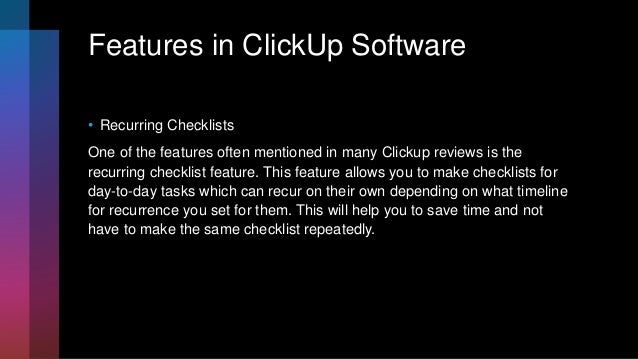
Credit: www.slideshare.net
Pricing And Affordability Comparison
Understanding the pricing and affordability of ClickUp and Taskroup helps choose the right tool. Pricing affects the value users get for their money. Budget-conscious teams need clear cost details and plan options. This section breaks down each tool’s pricing, comparing costs and benefits.
Clickup Pricing Structure: Plans And Value For Money
ClickUp offers multiple plans to fit various user needs and budgets. The plans include:
- Free Plan: Basic features for personal use and small teams.
- Unlimited Plan: Priced at $5 per user/month, unlocks unlimited storage and integrations.
- Business Plan: $12 per user/month, adds advanced automation and reporting.
- Enterprise Plan: Custom pricing for large organizations with security needs.
ClickUp’s pricing gives strong value for money. Even the Unlimited plan offers powerful features at a low cost. Users get a wide range of tools in one platform, reducing the need for multiple apps.
Taskroup Pricing Breakdown: Cost-effectiveness And Options
Taskroup pricing is straightforward with fewer tiers:
| Plan | Price (per user/month) | Features |
|---|---|---|
| Basic | Free | Essential task and project management |
| Pro | $7 | Advanced collaboration and integrations |
| Business | $15 | Custom workflows and priority support |
Taskroup’s plans focus on cost-effectiveness. The Pro plan is affordable for small to medium teams. Businesses needing extra features can upgrade easily.
Which Tool Offers Better Roi For Different User Types?
Small Teams and Individuals:
- ClickUp’s Free and Unlimited plans provide many features at low cost.
- Taskroup’s Basic plan suits those who want simple task management without expense.
Medium to Large Teams:
- ClickUp’s Business plan supports automation and reporting, improving productivity.
- Taskroup’s Business plan offers custom workflows but at a higher price.
Enterprises and Complex Needs:
- ClickUp’s Enterprise plan delivers robust security and customization.
- Taskroup lacks a clearly defined enterprise option.
Overall, ClickUp provides a better return on investment for users needing advanced features and scalability. Taskroup works well for budget-conscious teams with simpler needs.
Pros And Cons Based On Real-world Usage
Choosing the right productivity tool depends on real experiences with the software. Users often share insights about what works and what does not. This section reveals the strengths and weaknesses of ClickUp and Taskroup from actual users. It helps to understand which tool fits different work styles and team needs.
Advantages Of Using Clickup: Strengths In Productivity And Flexibility
ClickUp stands out for its all-in-one platform approach. Users praise its ability to combine tasks, docs, goals, and chats in one place. This reduces app switching and saves time.
- Highly customizable workflows and views fit various project styles.
- Robust task management with priorities, dependencies, and reminders.
- Automation features help reduce repetitive work.
- Integration with many tools keeps work connected.
- Mobile and desktop apps allow work on the go.
Users find ClickUp’s flexibility useful for both small teams and large projects. Its interface adapts well to complex workflows.
Limitations And Drawbacks Of Clickup: Areas For Improvement
ClickUp has a steep learning curve for new users. The many features can feel overwhelming initially.
- Interface complexity may slow down beginners.
- Performance lag reported on heavy projects or slower devices.
- Notification overload can distract users without proper settings.
- Some advanced features require paid plans.
Users suggest better onboarding and simpler views for new users. More speed improvements would enhance experience.
Benefits Of Taskroup: What Users Appreciate Most
Taskroup is valued for its simple and clear task management. Users like the straightforward design and ease of use.
- Clean interface reduces confusion and speeds up task creation.
- Effective collaboration tools allow easy communication within tasks.
- Basic automation simplifies routine task handling.
- Good for small to mid-size teams needing clear task tracking.
- Affordable pricing suits budget-conscious users.
Taskroup users value its focus on essential features without extra complexity.
Challenges With Taskroup: Potential User Concerns
Taskroup may lack some advanced features that larger teams need. Users point out limits in customization and integrations.
- Fewer integration options compared to more complex tools.
- Limited reporting and analytics for tracking progress deeply.
- Basic automation may not cover all workflow needs.
- Less flexible task views restrict handling complex projects.
Users needing detailed project tracking or advanced workflows might find Taskroup limiting.
Credit: taskroup.com
Recommendations For Ideal Users And Scenarios
Choosing the right project management tool depends on your team’s needs and work style. Both ClickUp and Taskroup offer unique features designed for different users and industries. Understanding who benefits most from each platform helps make a smart choice. Explore the best fits for both tools below.
Who Should Choose Clickup? Best Use Cases And Industries
ClickUp suits teams needing an all-in-one workspace to manage complex projects. It replaces multiple apps by combining tasks, docs, goals, and AI tools in one place.
- Best Use Cases: Project management, task automation, workflow customization, and time tracking.
- Industries: IT and software development, marketing agencies, consulting firms, and large enterprises.
- Teams requiring detailed task hierarchies and multiple views like Gantt charts or Kanban boards.
ClickUp excels where productivity and flexibility matter most. It fits well for teams handling diverse projects with evolving needs.
Ideal Users For Taskroup: When Simplicity Meets Efficiency
Taskroup is ideal for users who prefer straightforward task management without complex features.
- Small teams or freelancers needing quick setup and easy task tracking.
- Projects with simple workflows and fewer dependencies.
- Users who value clean, minimal interfaces and fast collaboration.
Taskroup works best for those who want efficiency with less learning curve. It keeps task management light and clear.
Choosing Between Clickup And Taskroup Based On Team Size And Needs
| Criteria | ClickUp | Taskroup |
|---|---|---|
| Team Size | Medium to large teams | Small teams and individuals |
| Complexity | High; supports complex projects | Low; simple task tracking |
| Customization | Extensive options and integrations | Limited but user-friendly |
| Learning Curve | Moderate to steep | Minimal |
| Best For | Teams needing all-in-one productivity platform | Users wanting quick, easy task management |
Teams choosing ClickUp should prepare for a feature-rich environment. Taskroup offers simplicity ideal for fast, efficient task handling.
Conclusion: Making The Ultimate Productivity Choice In 2026
Choosing between ClickUp and Taskroup shapes your productivity in 2026. Both tools offer unique features tailored to different workflows. Understanding their strengths helps pick the right app for your needs. This final section breaks down key differences, matches tools to work styles, and explores their future developments.
Summary Of Key Differentiators
| Feature | ClickUp | Taskroup |
|---|---|---|
| All-in-One Workspace | Yes – Combines apps, AI agents, and humans | Limited – Focus on task management only |
| Task Types and Customization | Highly customizable with multiple task types | Basic task management with fewer options |
| User Interface | Complex but powerful, suitable for advanced users | Simpler, more straightforward for beginners |
| Automation & AI Integration | Advanced automation and AI agents included | Minimal automation features |
| Ideal Use Case | Teams needing all-in-one productivity and flexibility | Small teams or individuals seeking simple task tracking |
Final Thoughts On Which Tool Suits Your Workflow
ClickUp fits users who want an integrated platform. It works well for teams juggling many projects and tools. Its broad feature set supports complex workflows.
Taskroup suits users needing a simple, clear task manager. It works best for those focusing mainly on task lists without extra layers.
Choose ClickUp for flexibility and powerful automation. Pick Taskroup for ease of use and straightforward task handling.
Future Outlook: How Both Tools Are Evolving
- ClickUp plans to expand AI capabilities and unify more apps into one platform.
- Taskroup focuses on improving simplicity and enhancing core task management features.
- Both tools are adapting to remote work trends and increasing team collaboration.
- Expect more integrations and smarter automation from both by late 2026.
Staying updated with their development helps users pick the best tool as needs evolve.
Credit: www.slideshare.net
Frequently Asked Questions
Is There Anything Better Than Clickup?
Several tools can outperform ClickUp depending on needs. Monday. com excels in visual workflows, Asana offers simple task management, Notion provides flexible workspaces, and Jira suits agile development teams. Choose based on features like customization, simplicity, or industry focus for the best fit.
What Is The Best Task Management Tool?
ClickUp ranks among the best task management tools for its all-in-one features and customization. Alternatives include Monday. com, Asana, Trello, and Jira, each excelling in specific workflows and team needs. Choose based on your project complexity and preferred interface style.
What Is The Difference Between Google Tasks And Clickup?
Google Tasks offers simple, basic task management within Google apps. ClickUp provides advanced project management, collaboration, automation, and customization features for teams.
How To Group Tasks In Clickup?
To group tasks in ClickUp, open a List or Board view, click “Group,” and select criteria like status, assignee, or priority. This organizes tasks into manageable sections for better workflow and clarity.
Conclusion
Choosing between ClickUp and Taskroup depends on your needs and style. ClickUp offers many tools to manage tasks and projects in one place. Taskroup may appeal if you want a simpler, straightforward system. Both help teams stay organized and improve productivity. Visit ClickUp to explore its features and see if it fits your workflow. Try to match your choice with how you work best. A good tool makes work easier and helps you finish tasks faster.