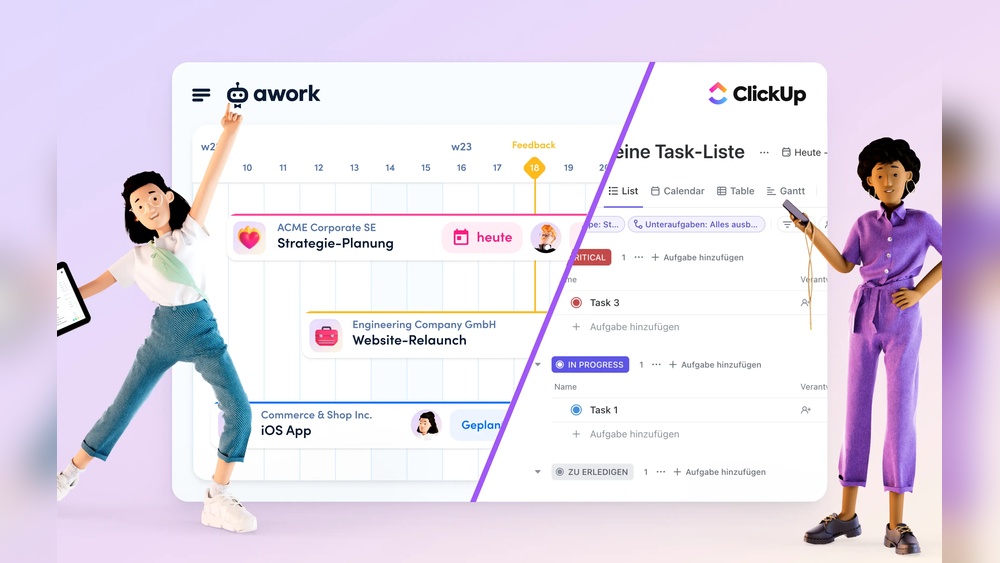
When it comes to managing your projects and boosting your productivity, choosing the right tool can make all the difference. You might be wondering how Awork stacks up against ClickUp and which one truly fits your needs.
Both platforms promise to streamline your workflow, but their features and strengths vary in ways that could impact how smoothly your team operates every day. If you’re looking for a powerful, all-in-one solution that replaces multiple apps and keeps everything—from tasks to conversations—in one place, ClickUp might be exactly what you need. Designed to maximize human productivity, ClickUp offers incredible customization options and flexible views that adapt to your unique workflow. Curious to see if it’s better than Awork for your projects? This detailed comparison will help you decide. Ready to explore how ClickUp can transform your work? Check it out here: ClickUp and discover the tool that could change the way you work forever. Keep reading to find out which platform suits your style and goals best.
Introduction To Awork And Clickup
Project management tools help teams organize tasks and improve productivity. Awork and ClickUp are popular solutions in this space. Each offers unique features and benefits for managing workflows. This section introduces both platforms and explains why their comparison matters in 2026.
Overview Of Awork: Purpose And Core Functionality
Awork is designed for teams focused on collaboration and task management. It aims to simplify project workflows through clear task assignments and timeline tracking.
- Task and project planning with deadlines
- Team collaboration with comments and file sharing
- Visual timelines and progress tracking
- Simple interface for easy onboarding
Awork suits small to mid-sized teams needing straightforward task organization without complex features.
Overview Of Clickup: Purpose And Core Functionality
ClickUp focuses on maximizing human productivity by replacing multiple apps with one platform. It supports a variety of workflows across different departments.
- Task management with customizable views (list, board, calendar)
- Built-in docs, goals, and chat for team communication
- Automations and integrations with popular tools
- AI-powered features to boost efficiency
- Highly flexible to fit many industries and team sizes
ClickUp works well for teams needing an all-in-one app with deep customization options.
Why Compare Awork And Clickup In 2026?
Both Awork and ClickUp help teams organize work, but they target different needs. Comparing them helps users pick the right tool for their unique workflows.
- Feature fit: Identify which tool matches your team’s tasks and projects.
- Usability: Find the platform that your team can adopt quickly and use daily.
- Scalability: Choose a tool that grows with your team size and project complexity.
- Cost-effectiveness: Evaluate pricing against features and team needs.
In 2026, productivity demands keep rising. Selecting the right project management software is key to staying competitive.
Key Features That Set Awork Apart
Awork stands out with features designed to simplify task management and improve team collaboration. Its focus lies in making daily workflows smoother and tracking time effortlessly. These key features make Awork a strong choice for teams wanting a clear, efficient way to manage projects without added complexity.
Intuitive Task And Time Management: Streamlining Daily Workflows
Awork offers a simple yet powerful way to manage tasks alongside time tracking. Users can easily create, assign, and prioritize tasks while monitoring how much time is spent on each.
- Task boards and lists: Organize work visually with drag-and-drop ease.
- Time tracking linked to tasks: Start and stop timers directly on tasks.
- Daily workflow view: Focus on what matters each day.
This combination helps teams avoid switching between apps and keeps focus on completing tasks efficiently.
Collaborative Project Planning: Enhancing Team Communication
Team members can plan projects together inside Awork, keeping communication clear and centralized.
- Shared project timelines: Visualize milestones and deadlines.
- Comment threads on tasks: Discuss details without losing context.
- Real-time updates: Everyone stays informed about progress and changes.
These tools reduce email clutter and keep conversations tied directly to work items.
Integrated Time Tracking: Solving Billing And Productivity Challenges
Tracking time is built into Awork’s core features, helping teams solve billing and productivity issues.
| Benefit | How Awork Helps |
|---|---|
| Accurate Billing | Log exact hours on client projects for precise invoices. |
| Productivity Insights | Analyze time spent to identify workflow bottlenecks. |
| Easy Reporting | Generate reports showing task time and team effort. |
This integration eliminates manual timesheets and guesswork.
Simplified User Interface: Reducing Onboarding Time And Complexity
Awork’s clean and simple interface helps new users get started quickly.
- Minimal learning curve: Clear navigation and layout.
- Essential features upfront: No hidden menus or confusing options.
- Consistent design: Easy to move between projects and tasks.
Teams spend less time training and more time working productively.
Key Features That Make Clickup Unique
ClickUp stands out with features designed for diverse teams and workflows. It combines flexibility, integration, and automation in one platform. These features support productivity and clear communication.
Highly Customizable Workspaces: Adapting To Diverse Team Needs
ClickUp offers customizable workspaces to fit any team’s style. Users can create unique project views, statuses, and workflows. This makes it easy to match different team requirements.
Each workspace can be tailored with:
- Custom statuses and task types
- Personalized dashboards
- Flexible permission settings
Teams from marketing to operations can adapt the workspace to their specific needs.
Multiple View Options: Lists, Boards, Gantt For Versatile Planning
ClickUp supports various task views that suit different project styles. Users can switch between:
- List View – for simple task tracking
- Board View – for Kanban-style workflows
- Gantt Chart – for timeline and dependency planning
This flexibility helps teams visualize work clearly and plan efficiently.
All-in-one Solution: Integrating Docs, Tasks, And Conversations
ClickUp combines multiple tools into one platform, reducing the need for extra apps. It integrates:
- Docs – create and share documents without leaving tasks
- Tasks – manage assignments and progress in one place
- Conversations – chat and comment directly on tasks and projects
This integration keeps all work connected and easy to track.
Advanced Automation And Reporting: Boosting Efficiency And Insights
ClickUp includes powerful automation to save time on routine work. Teams can set rules to:
- Automatically assign tasks
- Change statuses based on triggers
- Send alerts and reminders
Reporting tools provide clear insights with customizable dashboards and detailed analytics. These help teams track performance and spot issues early.
Credit: max-productive.ai
Pricing And Affordability Breakdown
The pricing and affordability of project management tools play a key role in team decisions. Both Awork and ClickUp offer plans tailored to different team sizes and needs. Understanding their pricing models helps teams choose the best fit without overspending.
Awork Pricing Plans: Value For Small To Mid-sized Teams
Awork focuses on small to mid-sized teams with clear pricing tiers. Its plans provide essential project management features at reasonable costs. This makes Awork attractive for teams seeking straightforward, budget-friendly options.
| Plan | Price (per user/month) | Key Features |
|---|---|---|
| Free | $0 | Basic task management, limited projects |
| Professional | $8.50 | Advanced timelines, time tracking, integrations |
| Business | $15.00 | Automations, reports, priority support |
Small teams benefit from affordable plans with essential tools. Mid-sized teams get extra features suitable for scaling projects.
Clickup Pricing Structure: Flexibility For Varied Team Sizes
ClickUp offers a flexible pricing system designed for teams of all sizes. Its plans range from free tiers to enterprise-level options. This helps teams customize their spend according to features and user count.
| Plan | Price (per user/month) | Key Features |
|---|---|---|
| Free | $0 | Unlimited tasks, 100MB storage, collaboration tools |
| Unlimited | $5 | Unlimited integrations, dashboards, storage |
| Business | $12 | Advanced automations, goals, custom exporting |
| Enterprise | Custom pricing | Enhanced security, dedicated support, custom features |
ClickUp’s pricing suits startups to large enterprises. The free plan offers more storage and tasks than many competitors.
Comparative Analysis: Cost-effectiveness Based On Features And Usage
Comparing Awork and ClickUp reveals differences in cost and value. Each tool targets different user needs and budgets.
- Awork is best for small to mid-sized teams needing simple, predictable pricing.
- ClickUp provides more flexibility, with rich features at lower price points for growing teams.
- Both have free plans, but ClickUp offers more generous limits on tasks and storage.
- Awork’s higher tiers focus on professional support and automation features.
| Aspect | Awork | ClickUp |
|---|---|---|
| Starting Price | $0 (basic limits) | $0 (more generous limits) |
| Mid-tier Price | $8.50 per user | $5 per user |
| Feature Depth | Good for straightforward project needs | Advanced customization and integrations |
| Best for | Small to mid-sized teams with clear budgets | Teams needing scalable features and flexibility |
Budget-conscious teams with simple needs may prefer Awork. Teams requiring extensive features at flexible costs lean toward ClickUp.
Pros And Cons Based On Real-world Usage
Understanding the strengths and weaknesses of Awork and ClickUp helps teams choose the right tool. Real users share insights about how each platform performs daily. These insights highlight usability, performance, and overall experience. Below, we explore the advantages and limitations of both tools.
Awork Advantages And Limitations: User Experience Insights
Awork offers a clean, simple interface that users find easy to navigate. Its design reduces the learning curve for new users.
- Advantages:
- Intuitive task management and project tracking
- Clear visual timelines and progress indicators
- Good for small to medium teams needing straightforward workflows
- Responsive customer support
- Limitations:
- Lacks some advanced customization options
- Limited integrations compared to larger platforms
- Not ideal for complex project management needs
Clickup Strengths And Challenges: Performance And Complexity Considerations
ClickUp is powerful with many features, making it a versatile all-in-one platform. Users appreciate its flexibility but note some challenges.
- Strengths:
- Highly customizable workflows for diverse teams
- Wide range of features including docs, goals, and automation
- Supports complex project and task management
- Strong integration options with other tools
- Challenges:
- Steeper learning curve due to feature richness
- Performance can slow with large projects or heavy use
- User interface may feel overwhelming to some
Common User Feedback: What Teams Appreciate And What Needs Improvement
| Aspect | Awork Feedback | ClickUp Feedback |
|---|---|---|
| Ease of Use | Simple and clean interface praised by new users | Flexible but complex; requires training |
| Customization | Limited options, suits basic needs | Extensive customization for workflows and views |
| Performance | Fast and responsive for small teams | Can slow down with large data sets |
| Integrations | Fewer third-party integrations | Supports many apps and services |
| Support | Responsive and helpful | Active community and comprehensive resources |

Credit: www.awork.com
Ideal Users And Scenarios For Each Tool
Choosing the right project management tool depends on team type, project needs, and workflow style. Both Awork and ClickUp offer unique strengths tailored for different users and scenarios. Understanding which tool fits best helps teams work smarter and finish projects faster.
When To Choose Awork: Best Fit For Specific Team Types And Projects
Awork suits small to medium creative teams and marketing departments. It focuses on simplicity and clear task tracking.
- Creative agencies managing design projects with visual timelines
- Marketing teams needing straightforward campaign tracking
- Teams preferring easy onboarding with minimal learning curve
- Projects with defined stages and recurring workflows
Awork’s interface helps teams stay focused without overwhelming options. It offers essential task and time management features ideal for less complex workflows.
When Clickup Excels: Use Cases For Versatile And Customizable Management
ClickUp fits diverse teams from marketing to operations and software development. It is highly customizable, supporting complex workflows.
- Organizations needing an all-in-one platform to replace multiple apps
- Teams requiring custom fields, advanced automation, and detailed reporting
- Projects with multiple workflows and cross-department collaboration
- Users who want integrated AI tools and flexible task views
ClickUp works well for teams managing various tasks, including agile sprints, operations, and marketing campaigns. Its depth suits users ready to handle a learning curve.
Decision-making Guide: Matching Tool Features To Organizational Needs
| Criteria | Awork | ClickUp |
|---|---|---|
| Team Size | Small to medium | Small to large |
| Complexity of Projects | Simple to moderate | Moderate to complex |
| Customization | Basic task and time tracking | Highly customizable workflows and automation |
| Learning Curve | Low | Medium to high |
| Best for | Creative teams, marketing campaigns | Operations, software, marketing, and cross-functional teams |
Match your team’s needs with tool strengths. Choose Awork for simplicity and speed. Pick ClickUp for versatility and deep customization.
Final Verdict: Which Tool Wins The Productivity Showdown?
Choosing between Awork and ClickUp depends on your specific needs. Both platforms boost productivity but serve different purposes and users. This section breaks down their strengths, weaknesses, and ideal users to help you decide which fits best.
Summary Of Comparative Strengths And Weaknesses
| Feature | Awork | ClickUp |
|---|---|---|
| Ease of Use | Simple interface, easy for small teams | Complex but highly customizable |
| Customization | Limited options, straightforward setup | Highly customizable workflows and views |
| Task Management | Basic task tracking, good for small projects | Advanced task features, supports diverse workflows |
| Integrations | Fewer integrations, focused on core tools | Wide range of integrations including AI tools |
| Pricing | More affordable for startups and small businesses | Offers free tier; paid plans for advanced features |
| Performance | Fast with minimal complexity | Can be slower with heavy customization |
Recommendations For Different Business Sizes And Industries
- Small Teams & Startups: Awork suits teams needing simple project tracking without steep learning curves.
- Marketing & Creative Agencies: ClickUp fits well due to its versatility and broad feature set.
- Medium to Large Businesses: ClickUp supports complex workflows and multiple teams effectively.
- Tech & Software Development: ClickUp’s customization and integrations make it preferable.
- Freelancers & Solo Professionals: Awork provides an affordable, easy-to-use platform to manage tasks.
Looking Ahead: Future Developments And What To Expect In 2026
ClickUp plans to enhance AI capabilities, aiming to integrate AI agents deeply into workflows. Expect better automation and smarter task suggestions.
Awork is focusing on improving team collaboration features and expanding third-party integrations to support growing businesses.
Both tools will likely improve mobile experiences and increase customization options. Watch for updates that address user feedback on speed and usability.
Adopting either platform in 2026 means access to more intelligent productivity features and smoother team coordination.
Credit: max-productive.ai
Frequently Asked Questions
What’s Better Than Clickup?
Wrike suits agile design teams, Screendragon fits enterprise marketing, monday. com offers easy onboarding, and Zoho Projects excels in drag-and-drop automation. Choose based on your team’s specific needs beyond ClickUp’s versatility and customization.
Is Clickup Really Better Than Jira?
ClickUp suits versatile, non-technical teams needing customization and all-in-one features. Jira excels in complex software development and agile workflows. Choose based on your team’s focus, as neither tool is universally better.
Why Is Clickup So Popular?
ClickUp is popular for its all-in-one platform, high customization, versatile features, and user-friendly interface. It suits various teams and workflows.
Is Clickup Better Than Teams?
ClickUp offers versatile, customizable project management for various teams. Microsoft Teams excels in communication and collaboration. Choose ClickUp for task tracking; choose Teams for seamless chat and meetings. The better option depends on your team’s specific needs and workflow preferences.
Conclusion
Both Awork and ClickUp offer solid project management tools. Awork suits teams wanting simple, clear task tracking. ClickUp fits users needing high customization and many features. ClickUp combines docs, tasks, and chats in one app. It helps replace multiple tools easily. For teams wanting versatility and growth, ClickUp stands out. Explore ClickUp’s features and see if it fits your needs: ClickUp. Choose the tool that best matches your workflow and goals.