
Choosing the right project management tool can transform how you work, but with so many options, making the best choice feels overwhelming. If you’ve been weighing ClickUp versus Aha, you’re in the right place.
You want a solution that not only keeps your projects on track but also boosts your productivity without adding complexity. ClickUp promises to replace all your scattered apps by bringing every tool, AI agent, and team member into one easy-to-use platform. Imagine having your tasks, timelines, and goals all in one place—simplifying your workflow and freeing up mental space. On the other hand, Aha! Offers a comprehensive product management platform with strong customer feedback and engineering integrations, ideal if you want end-to-end control. But which one fits your style and needs better? Keep reading as we break down the key features, benefits, and potential drawbacks of both tools. By the end, you’ll know exactly which platform will help you work smarter, not harder. Ready to see what ClickUp can do for you? Check it out here: ClickUp.
Credit: inspireip.com
Introduction To Clickup And Aha!
Aha! stands out as a comprehensive product management tool designed to cover every stage of the product lifecycle. Its features focus on linking customer feedback with engineering efforts, strategic roadmapping, and flexible customization. The platform supports smooth collaboration across teams, helping organizations stay aligned and efficient. Below are the core features that set Aha! apart in the product management space.
End-to-end Product Management: From Customer Feedback To Engineering Integration
Aha! provides a seamless workflow from collecting customer feedback to delivering product updates to engineering teams. It allows product managers to:
- Capture ideas and requests directly from customers and stakeholders
- Prioritize features based on strategic goals and user value
- Create detailed requirements that engineers can easily understand and implement
- Track progress and link development work back to initial ideas
This end-to-end traceability ensures that every feature is connected to a clear purpose and customer need.
Roadmapping And Strategy Planning: Aligning Teams And Goals
Aha! excels in helping teams build visual roadmaps that communicate strategy clearly. The roadmapping tools enable:
- Setting goals and initiatives that guide product direction
- Breaking down plans into releases, features, and tasks
- Adjusting timelines and priorities with drag-and-drop ease
- Sharing roadmaps with stakeholders to keep everyone aligned
Strategic planning becomes transparent, helping teams focus on what matters most.
Customization And User Experience: Balancing Flexibility And Usability
Aha! offers extensive customization while maintaining a user-friendly interface. Key points include:
- Custom fields and workflows tailored to specific team needs
- Multiple views such as lists, boards, and timelines for diverse preferences
- Templates that speed up setup without sacrificing flexibility
- A clean interface that reduces learning curves for new users
This balance allows teams to adapt the tool without feeling overwhelmed.
Collaboration And Integration Capabilities: Streamlining Cross-functional Workflows
Aha! supports strong collaboration by connecting various teams and tools. Features include:
- Commenting and notifications that keep communication centralized
- Integration with popular development platforms like Jira, Azure DevOps, and GitHub
- APIs for custom integrations with other software
- Role-based permissions to control access and maintain security
These capabilities help teams work together smoothly and keep all work aligned.

Credit: blog.gyde.ai
Key Features That Differentiate Clickup
Choosing the right project management tool depends heavily on pricing and value. Both ClickUp and Aha! offer various pricing options tailored to different needs. Understanding their pricing tiers helps teams pick plans that fit their budget and project scale. This section breaks down each platform’s pricing and compares their value for money.
Clickup Pricing Tiers: Free Plan To Enterprise Solutions
ClickUp provides a range of pricing plans from free to enterprise level. This variety suits individual users, small teams, and large organizations.
| Plan | Price (per user/month) | Key Features |
|---|---|---|
| Free | $0 | Unlimited tasks, 100MB storage, 24/7 support |
| Unlimited | Approx. $5 | Unlimited storage, integrations, dashboards |
| Business | Approx. $12 | Advanced automation, goals, workload management |
| Enterprise | Custom pricing | Custom permissions, white labeling, dedicated support |
ClickUp’s free plan offers solid basic features. Paid plans add advanced tools for growing teams.
Aha! Pricing Models: Subscription Plans And Add-ons
Aha! uses subscription plans with extra add-ons for more functionality. Pricing reflects its focus on product management.
| Plan | Price (per user/month) | Key Features |
|---|---|---|
| Aha! Roadmaps | Approx. $59 | Product roadmaps, idea management, integrations |
| Aha! Ideas | Approx. $39 | Customer feedback, idea portals |
| Aha! Develop | Approx. $59 | Agile development tools, issue tracking |
Add-ons may raise total cost but provide specialized features for product teams.
Value For Money: Comparing Features Against Cost
- ClickUp offers comprehensive features in affordable plans.
- Free plan supports many tasks, ideal for startups or freelancers.
- Advanced automation and dashboards come with mid-tier plans.
- Aha! targets product managers with specialized tools at higher prices.
- Pricing suits teams needing deep product planning and feedback systems.
- ClickUp gives more general project management at a lower price point.
Overall, ClickUp is more budget-friendly for general use. Aha! fits teams needing focused product management capabilities.
Suitability Of Pricing For Different Team Sizes And Budgets
- Small teams and freelancers: ClickUp’s free or Unlimited plan works well.
- Medium teams: ClickUp Business plan offers advanced features affordably.
- Large enterprises: ClickUp Enterprise provides customization and support.
- Product-focused teams: Aha!’s plans support complex workflows but cost more.
- Budget-conscious teams: ClickUp provides more flexibility and lower entry costs.
ClickUp suits varied budgets and team sizes. Aha! is best for specialized product teams with bigger budgets.
Key Features That Differentiate Aha!
Choosing the right project management tool depends on team needs and work style. Both ClickUp and Aha! serve distinct purposes. Understanding their strengths helps in selecting the best fit.
Who Should Choose Clickup: Teams Needing Visual Customization And Task Management
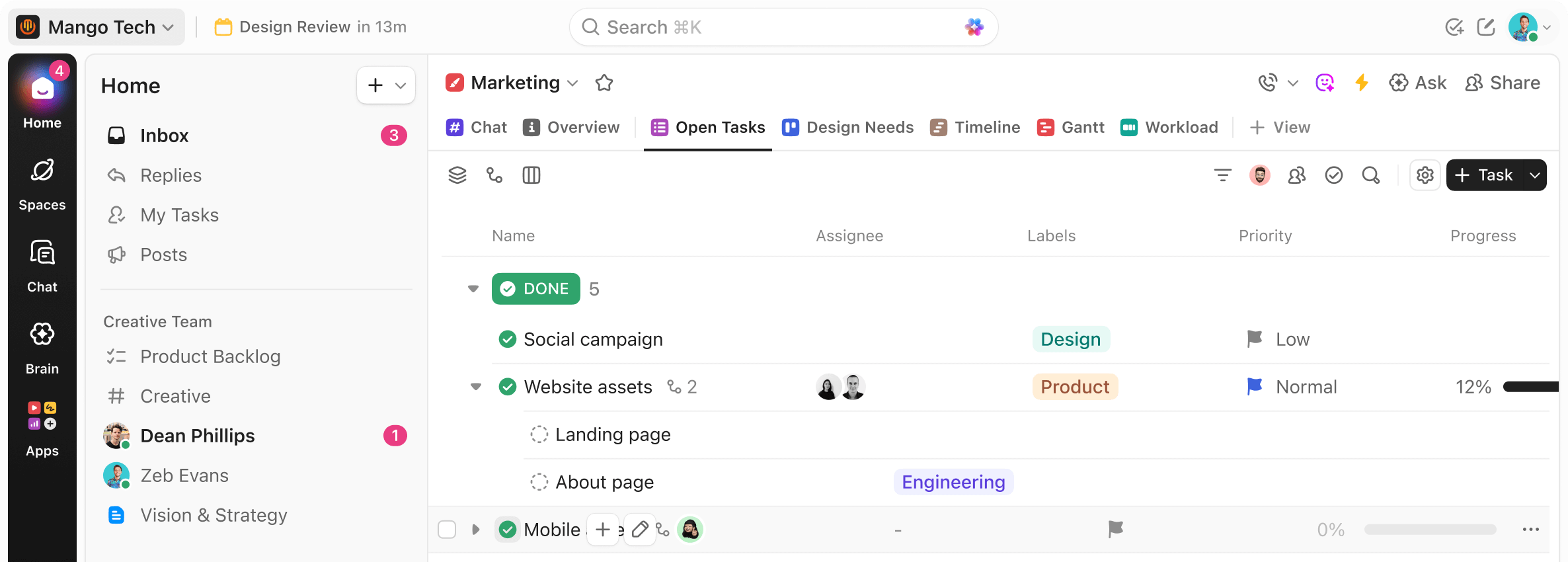
ClickUp suits teams that require flexible task views and visual customization. It offers multiple ways to organize work such as lists, boards, and Gantt charts. Teams that want to tailor workflows easily find ClickUp helpful.
Best for teams that:
- Handle diverse tasks daily
- Need visual project tracking
- Require custom statuses and fields
- Use different workflows for each project
Who Should Choose Aha!: Product Management Teams Focused On Strategy And Feedback
Aha! targets product managers focused on strategy, roadmaps, and customer feedback. It excels in aligning product vision with development efforts. Teams prioritizing planning and market-driven features benefit most.
Ideal for teams that:
- Manage product roadmaps
- Collect and prioritize customer ideas
- Align strategy with engineering
- Track goals and releases precisely
Use Cases Where Clickup Excels: Agile, Remote Work, And Adhd-friendly Environments
ClickUp thrives in fast-paced, flexible environments. It supports agile workflows with sprint planning and backlog management. Its remote work features enable seamless team collaboration from anywhere.
ClickUp is also praised for ADHD-friendly designs:
- Clear task breakdowns reduce overwhelm
- Multiple views help focus and organize
- Custom notifications prevent distractions
Great for:
- Agile teams needing quick adjustments
- Remote workers requiring real-time updates
- Individuals needing task clarity and structure
Use Cases Where Aha! Excels: End-to-end Product Development And Engineering Coordination
Aha! shines in managing the full product lifecycle. It connects strategy, releases, and engineering tasks smoothly. Teams can track features from idea to deployment.
Key strengths include:
- Detailed roadmapping tools
- Integration with development platforms
- Collaborative prioritization of features
- Tracking product goals and outcomes
Perfect for:
- Product teams coordinating with engineers
- Companies needing clear strategy-to-release alignment
- Organizations tracking customer feedback deeply

Credit: www.youtube.com
Frequently Asked Questions
What’s Better Than Clickup?
Wrike suits agile design and marketing teams better than ClickUp. Monday. com offers easier onboarding. Zoho Projects excels in drag-and-drop automation. Screendragon fits enterprise marketing and creative operations best. Choose based on your team’s specific needs for optimal project management.
Is Aha Any Good?
Aha! Offers a comprehensive platform for product management with customer feedback and engineering integrations. It suits teams needing end-to-end solutions but may lack in customization and affordability. Many users praise its features, though user experience can vary based on specific needs.
Is Clickup Good For Adhd?
ClickUp suits many with ADHD due to visual tools and customizable task breakdown. Simple setup and ADHD templates improve focus. Avoid clutter by hiding unnecessary features. Success depends on tailoring ClickUp to individual needs and maintaining a clean, manageable workspace.
Is Clickup Similar To Hubspot?
ClickUp and HubSpot serve different purposes. ClickUp focuses on project management, while HubSpot specializes in CRM and marketing automation. Both offer collaboration tools but target distinct business needs.
Conclusion
Choosing between ClickUp and Aha depends on your needs and team style. ClickUp offers a flexible, all-in-one platform for managing tasks and projects. It helps keep everything organized in one place. Aha focuses more on product management with customer feedback and engineering tools. Both have unique strengths for different workflows. For a tool that combines many apps and boosts productivity, consider ClickUp. Testing each can help find what fits your work best. Simple setup and clear goals improve your project success.